
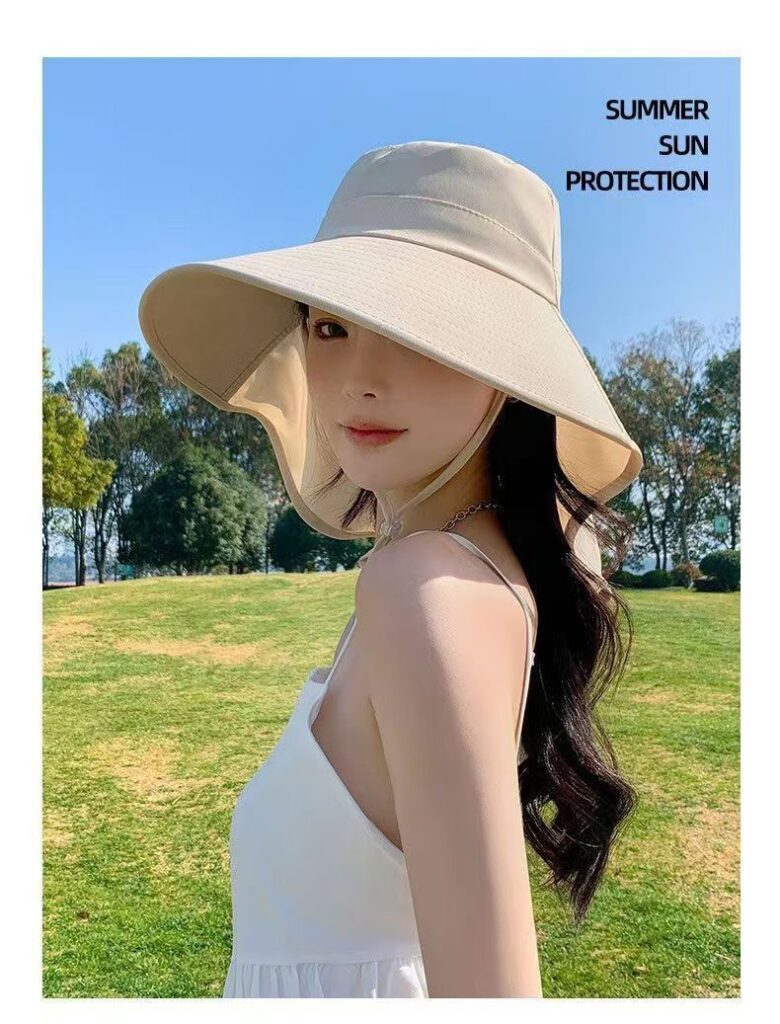
The best sun hat is not simply the one with the biggest brim. It is the one that gives useful shade where you need it, stays comfortable long enough to wear, and works with the way you actually spend time outdoors.
For many women, the face gets attention while the ears and back of the neck are easier to overlook. The Centers for Disease Control and Prevention recommends a hat with a brim all the way around that shades the face, ears and back of the neck. The American Academy of Dermatology also recommends combining a wide-brimmed hat with shade, protective clothing and sunscreen on exposed skin.
This guide compares three practical silhouettes—neck-covering, open-top and wide-brim straw-look hats—so you can choose by coverage, comfort, hairstyle and occasion rather than by appearance alone.
Best Sun Hats for Face and Neck Coverage: The Quick Answer
- Best for the most direct face-and-neck coverage: a wide-brim hat with an extended back flap.
- Best for airflow and ponytails: an open-top visor with a broad curved brim, paired with separate protection for the scalp, ears and neck.
- Best for vacation style and packability: a foldable large-brim straw-look hat with a close weave and secure chin strap.
If the back of your neck is your main concern, begin with the Neck-Covering UV Protection Sun Hat. If heat and hairstyle flexibility matter most, compare the UV-Protective Open-Top Sun Hat. For a more expressive beach or resort look, consider the Summer Large Brim Ethnic Straw Sun Hat.
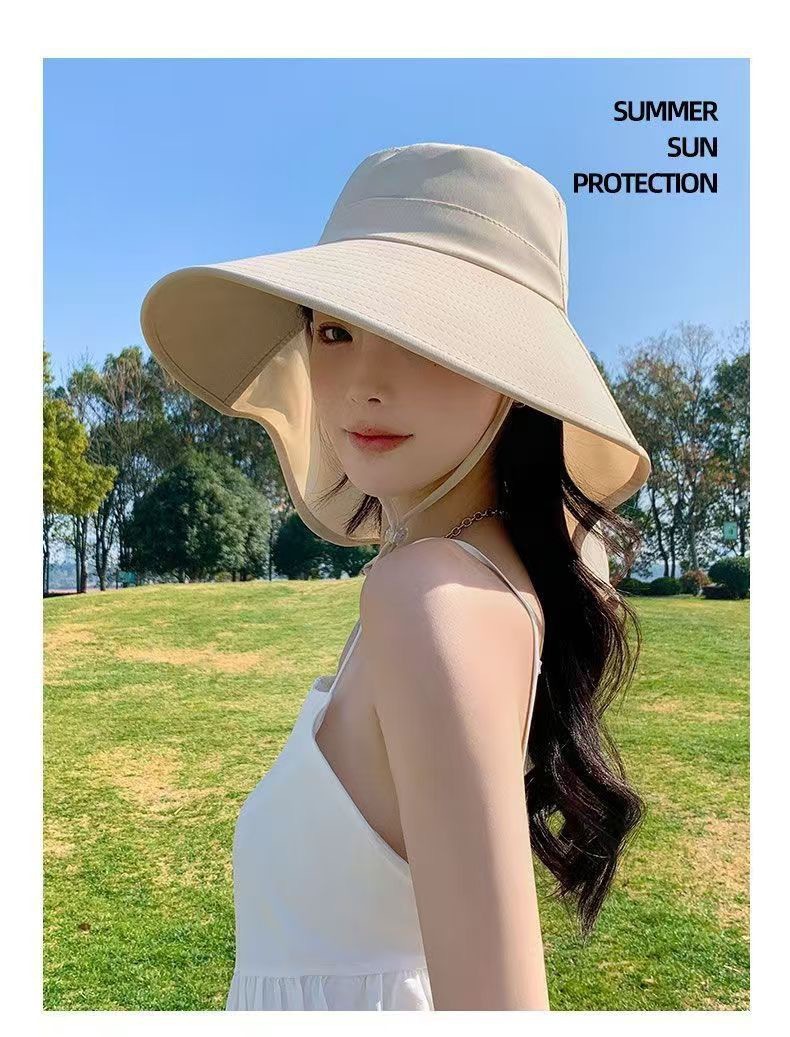
What Makes a Sun Hat Good for Face and Neck Coverage?
1. A brim that shades more than the forehead
A front-only visor can shade the eyes, nose and part of the cheeks, but it does not surround the ears or neck. For more complete shade, look for a brim that continues around the sides and back. CDC travel guidance describes a circumferential brim of about three inches or more as an ideal design for shading the face, ears and neck.
2. An extended neck flap
A soft back flap reaches lower than an ordinary brim and moves with the body. It is especially useful for gardening, long walks, sightseeing and other situations in which the back of the neck remains exposed for an extended time.
3. Opaque, closely constructed material
Visible gaps can allow sunlight through. CDC guidance favors tightly woven materials and cautions against straw hats with holes. A fashion straw-look hat may still add welcome shade, but shoppers should examine the weave rather than assuming every large brim provides the same level of coverage.
4. A fit that stays in position
A generous brim cannot help when it repeatedly lifts or slides backward. An adjustable chin cord, rear strap or internal band makes it easier to position the brim and keep it there during movement or light wind.
5. Comfort you will actually wear
Coverage must be balanced with heat, weight and hairstyle. An open crown may feel more comfortable in hot weather, while a ponytail opening can keep longer hair off the neck without forcing it under the crown.
6. Verified UPF information when that claim matters
“Sun hat,” “UV-protective” and “UPF 50+” are not interchangeable terms. UPF is a tested rating for fabric. If a specific UPF number is important to you, look for that rating on the product label or supporting documentation. In this article, we compare physical coverage and design features; we do not assign an unverified UPF value to any product.
Our Three Sun-Hat Styles Compared
Best Overall for Face and Neck: Neck-Covering Sun Hat
The Neck-Covering UV Protection Sun Hat is the strongest choice when coverage takes priority. It combines an oversized brim with an extended back flap, ponytail opening and adjustable chin cord. The cotton construction is lightweight, and the hat folds for travel.
Choose it for: gardening, beach days, sightseeing, daily walks, outdoor markets and long periods outside.
Why it stands out: the back flap directly addresses the area a standard visor leaves uncovered. You can wear the flap down for additional shade or roll it when you want a lighter silhouette.
Consider before buying: it has a more functional outdoor look than a dressy straw hat. If your priority is a polished event outfit rather than maximum neck coverage, a large-brim fashion silhouette may suit the occasion better.
Best for Airflow and Hairstyles: Open-Top Sun Hat
The UV-Protective Open-Top Sun Hat has a broad curved front brim, uncovered crown and adjustable rear strap. It works easily with ponytails, buns and hairstyles you do not want to flatten.
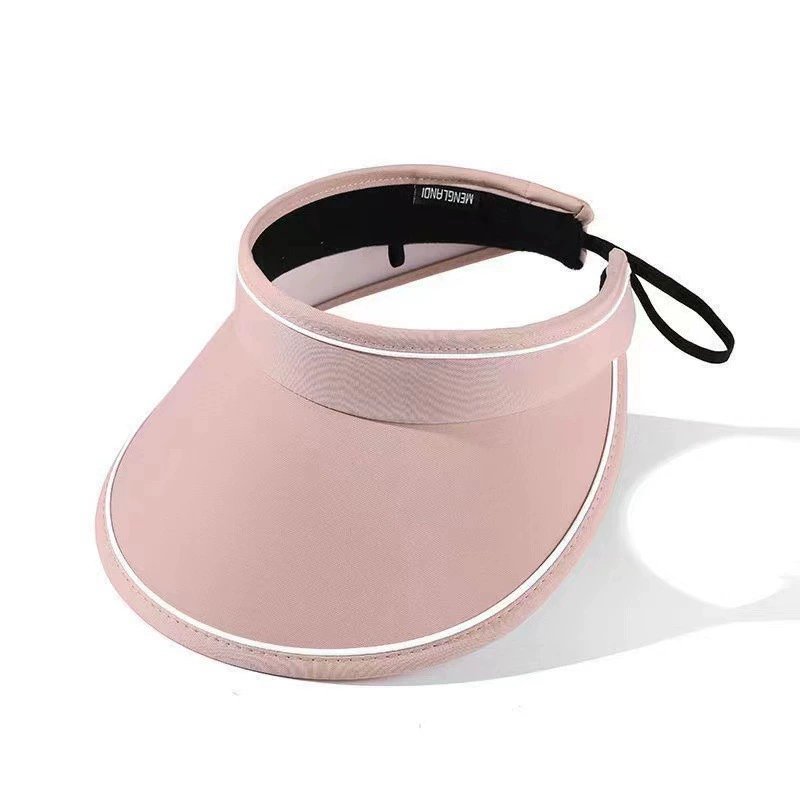
Choose it for: short walks, driving, sporting events, errands and warm days when ventilation is the deciding factor.
Why it stands out: it feels less enclosing than a full crown, and the adjustable strap helps refine the fit. Its clean piping and range of soft colors make it easy to coordinate with casual summer outfits.
Consider before buying: an open-top visor does not cover the scalp and provides less shade to the ears and back of the neck. Pair it with sunscreen on exposed skin, sunglasses, shade and clothing that covers the neck when needed.
Best for Vacation Style: Large-Brim Ethnic Straw Sun Hat
The Summer Large Brim Ethnic Straw Sun Hat is designed for women who want shade to feel like part of the outfit. Its colorful patterning, foldable woven construction and adjustable chin strap work with linen dresses, swimwear, cover-ups and simple weekend separates.
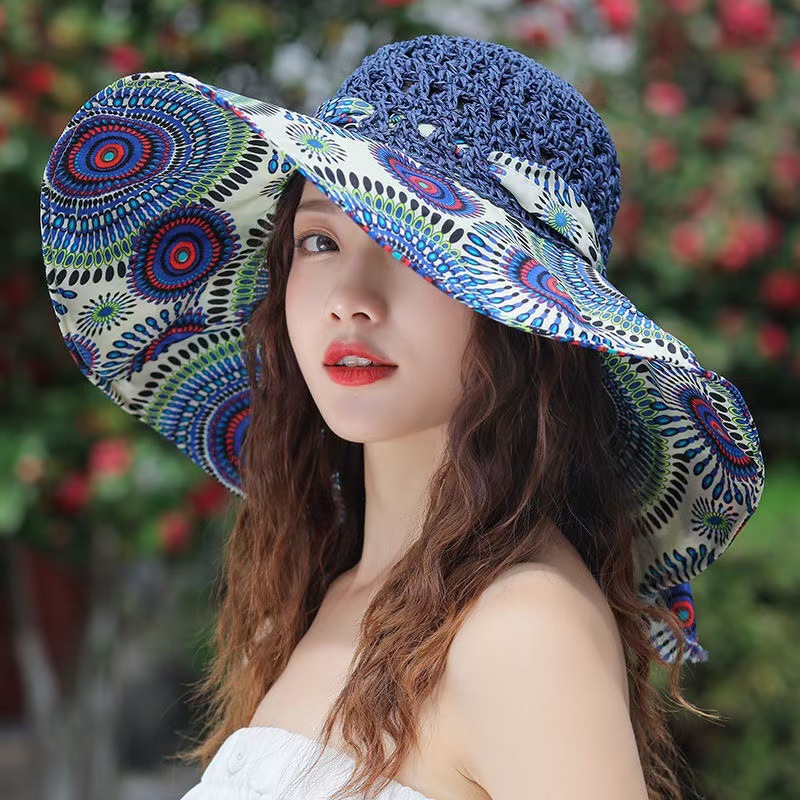
Choose it for: vacations, poolside afternoons, picnics, garden parties, sightseeing and outdoor events.
Why it stands out: the foldable design travels more easily than a rigid hat, while the chin strap adds stability in a breeze. Seven color options make it possible to use the hat as either a neutral finishing piece or the strongest color in the outfit.
Consider before buying: woven hats vary. Examine product photos for visible openings, and remember that a dramatic brim is not proof of a certified UPF rating. Use it as one part of a broader sun-safety routine.
Which Sun Hat Is Best for Your Activity?
Gardening and yard work
Choose the neck-covering design. You may bend forward, turn repeatedly and remain outside longer than planned, so a secure chin cord and back flap are useful.
Beach and pool days
Choose between the neck-covering hat for practical coverage and the large-brim straw-look hat for a more styled resort outfit. Keep in mind that water and sand can reflect sunlight, so continue using sunscreen and shade.
Travel and sightseeing
Packability, comfort and security matter. A foldable hat with a chin strap is convenient for breezy waterfront walks; a neck flap is helpful during longer outdoor tours.
Driving and quick errands
An open-top visor may be the easiest option because it preserves airflow and hairstyles. It is most suitable when your exposure is shorter and you are prepared to protect uncovered areas separately.
Outdoor parties and summer outfits
A colorful large-brim hat creates a deliberate fashion statement. Keep the rest of the outfit relatively simple—linen, cotton, a tonal dress or a clean swimsuit cover-up—so the patterned brim remains the focal point.
How to Choose the Right Fit
- Measure around your head just above the eyebrows and ears, keeping the tape level.
- Compare the measurement with the product size information rather than relying only on “one size.”
- Check the adjustment system. A rear strap changes the fit of a visor; a chin cord mainly adds security in wind.
- Test your viewing angle. The brim should shade the face without blocking the line of sight.
- Try your usual hairstyle. If you often wear a ponytail or bun, an open crown or ponytail opening may improve comfort.
A Hat Is One Layer, Not the Entire Sun-Safety Plan
Even a well-designed hat cannot shade every angle all day. The American Academy of Dermatology recommends a combination that includes shade, sun-protective clothing, a wide-brimmed hat, UV-protective sunglasses and broad-spectrum, water-resistant SPF 30 or higher sunscreen on uncovered skin.
Remember the areas that hats often miss: under the chin, parts of the cheeks, ears, hairline and any exposed section of the neck. Reposition your brim as the sun changes, and do not treat a hat as permission to extend exposure indefinitely.
Sun Hat FAQ
What type of hat best covers the back of the neck?
A wide-brim hat with an extended fabric flap offers the most direct back-of-neck coverage. The flap reaches lower than a conventional brim and remains useful when you lean forward.
Is an open-top sun visor enough?
It can provide helpful facial shade and excellent airflow, but it leaves the scalp uncovered and usually gives limited shade to the ears and neck. Add sunscreen, protective clothing or shade for those areas.
Is a wide brim better than a neck flap?
A wide brim shades from above and can look more polished. A neck flap extends lower and follows the back of the neck. For maximum functional coverage, a design that combines both is the stronger choice.
Do dark hats provide more UV protection?
Color can influence protection, but construction matters too. CDC notes that darker colors may offer more protection and that tightly woven fabric works best. Do not choose by color alone; consider weave, coverage and any verified UPF label.
Can a sun hat replace sunscreen?
No. A hat creates shade, but reflected and angled sunlight can still reach the skin. Use it with sunscreen on exposed areas, sunglasses, suitable clothing and shade.
Choose the Hat You Will Wear Consistently
The best sun hats for face and neck coverage solve a real problem without becoming something you leave at home. Choose the neck-covering design when coverage is the priority, the open-top visor when airflow and hairstyles matter most, and the large-brim straw-look hat when you want practical shade to become part of the outfit.
Compare all three styles in the Women’s Sun Hats collection, then open the individual product page to review colors, images and current availability before purchasing.