Satin and silk scarves can both look smooth, luminous and elegant, which is why the words are often used as if they mean the same thing. They do not.
The simplest distinction is this: silk describes a fiber, while satin describes a weave and the smooth surface it creates. A satin scarf may be made from silk, polyester or another fiber. A silk scarf may use a satin weave, but silk can also be woven into twill, chiffon, crepe and other fabrics.
That difference matters when you compare price, feel, warmth, care and what the product label actually promises.
Satin vs Silk Scarf: The Quick Answer
- Choose a satin scarf when you want a smooth sheen, defined print, easy outfit styling and often a more accessible price.
- Choose a silk or silk-blend scarf when natural-fiber content, nuanced texture, elegant drape and temperature comfort are important to you.
- Never assume “satin” means silk. Check the fiber-content label or product description.
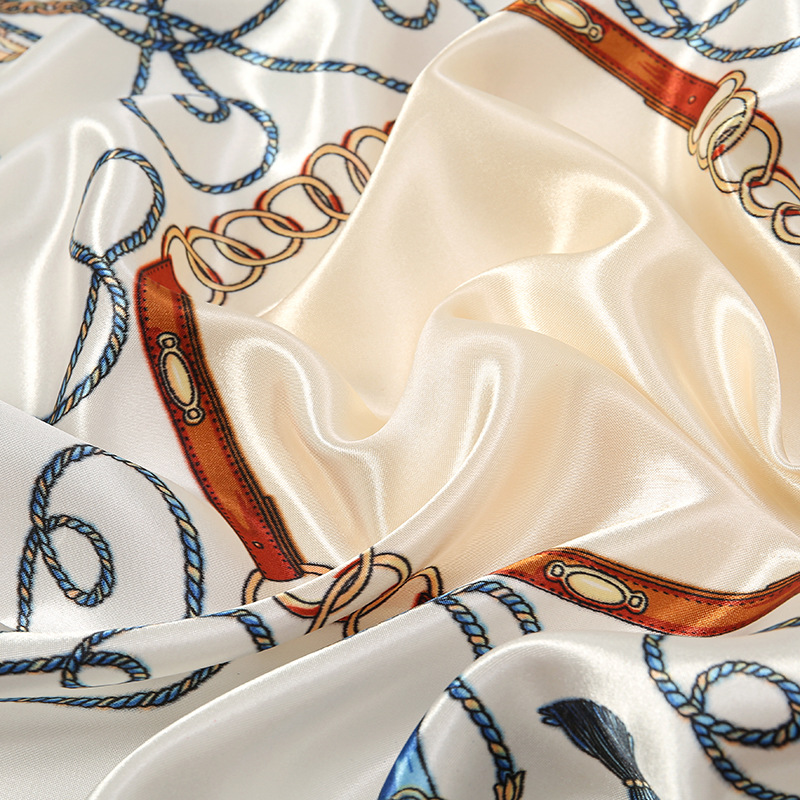
For example, the LadiesValue Vintage Equestrian Satin Square Scarf is accurately presented as satin without an unsupported natural-silk claim. The Mulberry Silk & Wool Blend Scarf, by comparison, lists its composition as 40% mulberry silk and 60% wool.
What Is Silk?
Silk is a natural protein fiber traditionally produced from silkworm cocoons. The fiber can be spun or reeled and then woven in several different ways. That means “silk” tells you what the textile contains, but not necessarily how its surface was constructed.
Silk is valued for its light-reflecting character, smooth hand feel and ability to create fluid drape without always feeling heavy. The exact result still depends on weave, weight, finishing and whether the silk is blended with another fiber.
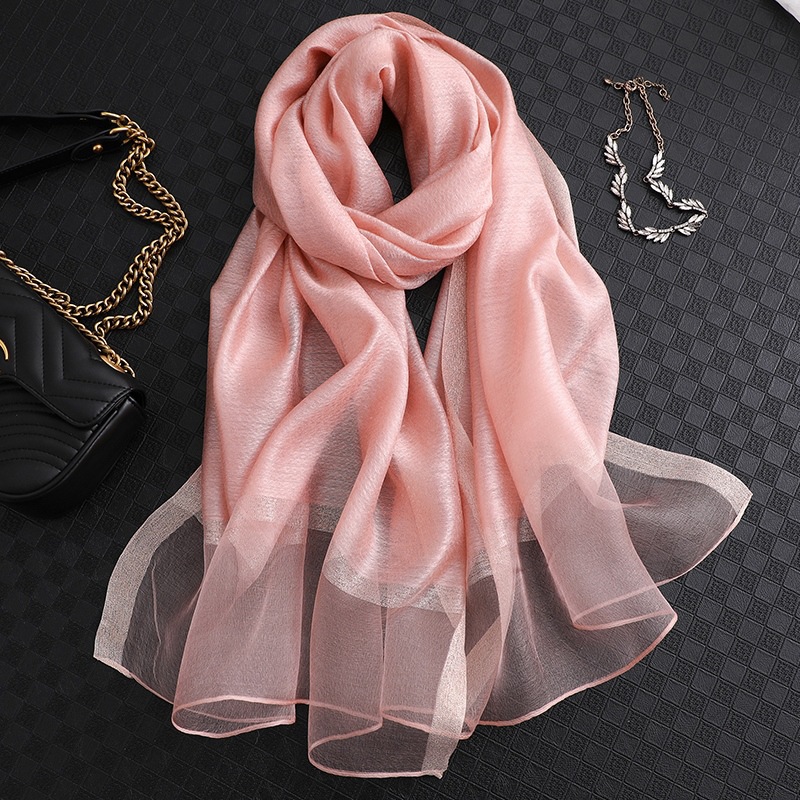
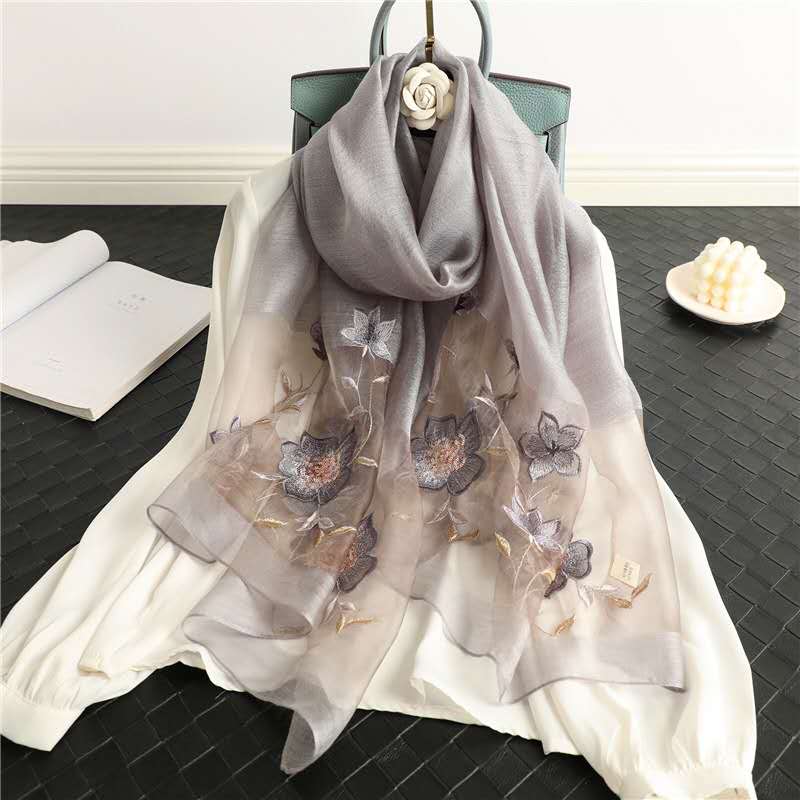
In a silk-wool blend, the two fibers contribute different qualities. LadiesValue’s Embroidered Mulberry Silk & Wool Scarf combines 40% mulberry silk with 60% wool in a 70 × 190 cm format. The silk contributes smoothness and subtle light reflection, while the wool adds body and comfortable warmth.
What Is Satin?
Satin refers to a weave structure that leaves longer sections of thread floating across the surface. Those floats reflect light and create the familiar smooth, lustrous face. Satin can be woven from different fibers, including silk and manufactured fibers.
This is why “satin vs silk” is not a perfect either-or comparison. One term describes construction; the other describes fiber. A scarf can technically be both silk and satin if silk fibers are used in a satin weave.
For shoppers, the practical question is: What fiber is this particular satin made from? If the page or label does not identify natural silk, do not assume it contains silk simply because it looks glossy or feels smooth.
The United States Federal Trade Commission explains that textile labels should identify generic fiber names and percentages. Its textile labeling guidance also illustrates why a product should not be described as 100% silk when other deliberately added fibers are present.
Silk vs Satin Scarf: The Differences That Matter When You Wear It
1. Fiber content
A silk scarf contains silk fiber in the percentage stated on its label. A satin scarf can be woven from silk, polyester or another fiber. Always read the composition rather than judging by shine alone.
2. Drape and structure
Natural silk can range from airy and crisp to fluid and dense depending on the weave. Satin also varies, but many fashion satin scarves are selected for a smooth surface, defined print and folds that remain visually clear.
A 90 × 90 cm satin square such as the England Style Satin Square Scarf works well for compact neck knots, front triangles, headbands and handbag wraps. A 70 × 190 cm silk-wool blend creates longer lines, relaxed loops and shoulder coverage.
3. Shine
Satin usually has a distinctly smooth, light-catching face. Silk has natural luster, but not every silk fabric is highly shiny. Silk twill, crepe or wool blends may appear softer or more dimensional than a glossy satin surface.
4. Warmth and seasonal use
Fiber, weight and construction all affect comfort. A lightweight satin square is convenient when you want pattern without much bulk. A silk-wool blend provides more warmth and is better suited to cool offices, travel and transitional weather.
5. Care
Do not choose a washing method from the word “satin” or “silk” alone. Follow the product care label. Natural silk and wool blends often need gentler handling, while care requirements for satin vary according to the actual fiber and finish.
6. Price
Natural silk is generally positioned at a higher price because of its fiber and production process. Satin made from manufactured fibers is often more accessible. Blends can offer natural-fiber character with additional warmth, structure or durability from the companion fiber.
When a Satin Scarf Is the Better Choice
Choose satin when the immediate goal is visual transformation: a crisp print at the neckline, a polished hair accent, a bright handbag detail or an affordable way to test a new color.
Satin square scarves are particularly useful when you want:
- a smooth, light-catching finish;
- clear vintage, floral, equestrian or polka-dot prints;
- a square format for neck, hair and handbag styling;
- an accessory that adds impact without a heavy layer.
Compare the Vintage Contrast Color Floral Square Scarf for softer floral movement with the Retro Polka Dot Satin Square Scarf for a more graphic focal point.
When a Silk or Silk-Blend Scarf Is the Better Choice
Choose silk or a documented silk blend when fiber content is part of the value you want. A silk-wool scarf is especially useful when you prefer natural fibers, a softer tonal sheen, generous drape and warmth without the look of a bulky winter scarf.
The 40% mulberry silk and 60% wool scarves in the LadiesValue collection are 70 × 190 cm, making them suitable for loose neck loops, relaxed knots, shoulder drapes and coat styling. Choose the plain Mulberry Silk & Wool Blend Scarf for understated layering or the embroidered version when you want texture to become the focal point.
Where Does “Simulated Silk” Fit?
“Simulated silk” or “silk-like” describes an appearance or hand feel; it does not mean natural silk. This option can make sense when you want fluid drape, generous coverage and a more accessible price.
The Gardenia Brocade UPF 35+ Simulated Silk Scarf is clearly identified as a polyester-based simulated silk blend rather than natural silk. Its 180 × 90 cm format is designed for neck, shoulder and head coverage. Clear wording helps the customer choose it for what it is rather than confusing it with a natural-silk product.
How to Read a Scarf Product Page Before Buying
- Find the fiber percentages. Look for silk, wool, polyester or other named fibers.
- Separate fiber from finish. “Satin,” “silky” and “lustrous” do not prove natural-silk content.
- Check dimensions. Square scarves and long rectangular scarves create different styling options.
- Review care instructions. Fiber blends and decorative embroidery may require gentler care.
- Choose for use, not terminology. Decide whether you need a neck accent, hair scarf, shoulder layer, travel wrap or seasonal warmth.
Browse all available shapes in the Women’s Scarves collection. For styling help, continue with How to Wear a Square Scarf or learn How to Choose a Scarf for Your Face Shape.
Satin vs Silk Scarf FAQ
Is satin the same as polyester?
No. Satin is a weave, while polyester is a fiber. Many affordable satin textiles use polyester, but satin can also be made from silk or other fibers. Check the label.
Can a silk scarf also be satin?
Yes. If silk fibers are woven in a satin structure, the fabric can accurately be described as silk satin.
Does “silky scarf” mean real silk?
Not necessarily. “Silky” usually describes feel or appearance. Look for a stated silk percentage before treating it as a natural-silk product.
Which is better for everyday fashion?
Neither is universally better. Satin squares are excellent for clear prints and quick styling. Silk and silk blends are strong choices when natural-fiber content, refined drape or additional warmth matters more.
Which scarf should I buy first?
Start with the job you want the scarf to do. Choose a satin square for neck, hair and handbag versatility; choose a long silk-wool blend for natural-fiber layering and shoulder coverage.
The Best Choice Is the One the Label Supports
Silk and satin should not compete as if they were identical materials. One names a fiber; the other names a weave. Once you understand that difference, the product page becomes easier to evaluate—and you can choose based on real composition, shape, styling purpose and budget.
Compare your options: Shop Women’s Scarves and select the scarf whose fiber information, dimensions and styling possibilities match the way you plan to wear it.