The right scarf does more than add color. Its shape, fold and placement create lines around the face—vertical, diagonal, curved or horizontal—and those lines can change the overall balance of an outfit.
That does not mean every face shape comes with strict fashion rules. Think of this guide as a starting point. The goal is to notice which scarf proportions make you feel polished, comfortable and recognizably yourself.
How to Choose a Scarf for Your Face Shape: The Quick Answer
First identify whether your face appears mostly oval, round, square, heart-shaped, long or diamond-shaped. Then choose the effect you want:
- For more length: create an open neckline or a vertical scarf drape.
- For more softness: use loose folds, curved loops and diagonal lines.
- For more width: add a compact neck knot or volume across the shoulders.
- For balance near the jaw: place color and movement below the chin rather than high around the cheeks.
The print matters, but placement usually matters more. One scarf can create several different effects depending on how it is folded. If you need the basic techniques first, see How to Wear a Square Scarf: 7 Easy Styling Ideas.
First, Find Your Face Shape
Pull your hair away from your face and look straight into a mirror. Compare the width of your forehead, cheekbones and jaw, then notice whether your face is longer than it is wide.
- Oval: softly balanced proportions, with the face slightly longer than wide.
- Round: similar width and length, with curved cheeks and a soft jawline.
- Square: forehead, cheekbones and jaw appear similar in width, with a defined jaw.
- Heart: a broader forehead or cheek area with a narrower chin.
- Long or oblong: noticeably more length than width.
- Diamond: cheekbones are the widest point, with a narrower forehead and jaw.
Many faces fall between two shapes. Use the section that describes the visual balance you want rather than trying to fit yourself into one exact label.
Best Scarves for a Round Face
Vertical and diagonal lines can create a longer, more open frame around a round face. Try a long scarf with the ends hanging below the collarbone, a loose off-center knot, or a square scarf folded into a narrow band and worn in a relaxed V.
Avoid building too much tight volume directly under the chin if you want a lengthening effect. Instead, leave a little space at the neckline and allow the ends to travel downward.
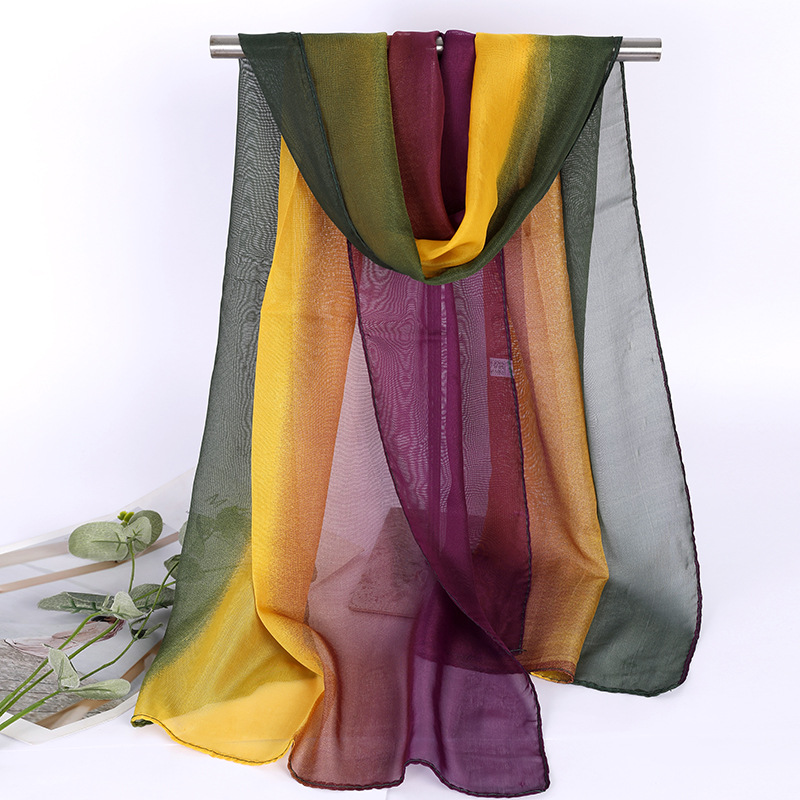
The Lightweight Ombre Chiffon Scarf for Women offers a soft, flowing vertical line and multiple color options. For cooler days, the longer Mulberry Silk & Wool Blend Scarf can be worn with relaxed ends rather than a bulky close wrap.
Best Scarves for a Square Face
Loose curves and diagonal folds can soften the strong angles of a square face. Fold a square scarf into a triangle, position the point slightly off-center, and tie it loosely. A softly rolled neck wrap also works well when it sits away from the jaw rather than forming a tight straight band.
Choose fluid-looking patterns—florals, curved chains or softly blended motifs—if you want to reinforce that sense of movement.
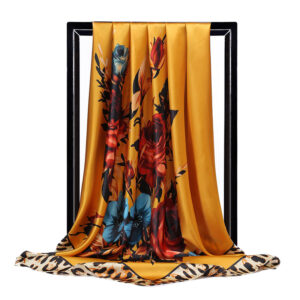
The Vintage Contrast Color Floral Square Scarf introduces curved floral detail, while the Vintage Equestrian Satin Square Scarf creates graceful diagonal lines when folded from corner to corner.
Best Scarves for a Heart-Shaped Face
For a heart-shaped face, try placing volume lower around the neck, collarbone or shoulders. A relaxed front triangle, low knot or shoulder drape draws attention downward and balances a narrower chin.
Keep the scarf slightly open at the throat instead of wrapping several tight layers high around the jaw. Medium-scale prints and softly draped fabric are easy starting points.
A versatile 90 × 90 cm option such as the England Style Satin Square Scarf for Women can be opened across the shoulders or folded into a low front triangle.
Best Scarves for a Long or Oblong Face
Compact scarf shapes and gentle horizontal volume can visually balance a longer face. Try a short French neck knot, a softly rolled wrap, or a bow positioned slightly to the side. Keep the ends shorter rather than allowing them to create another long vertical line.
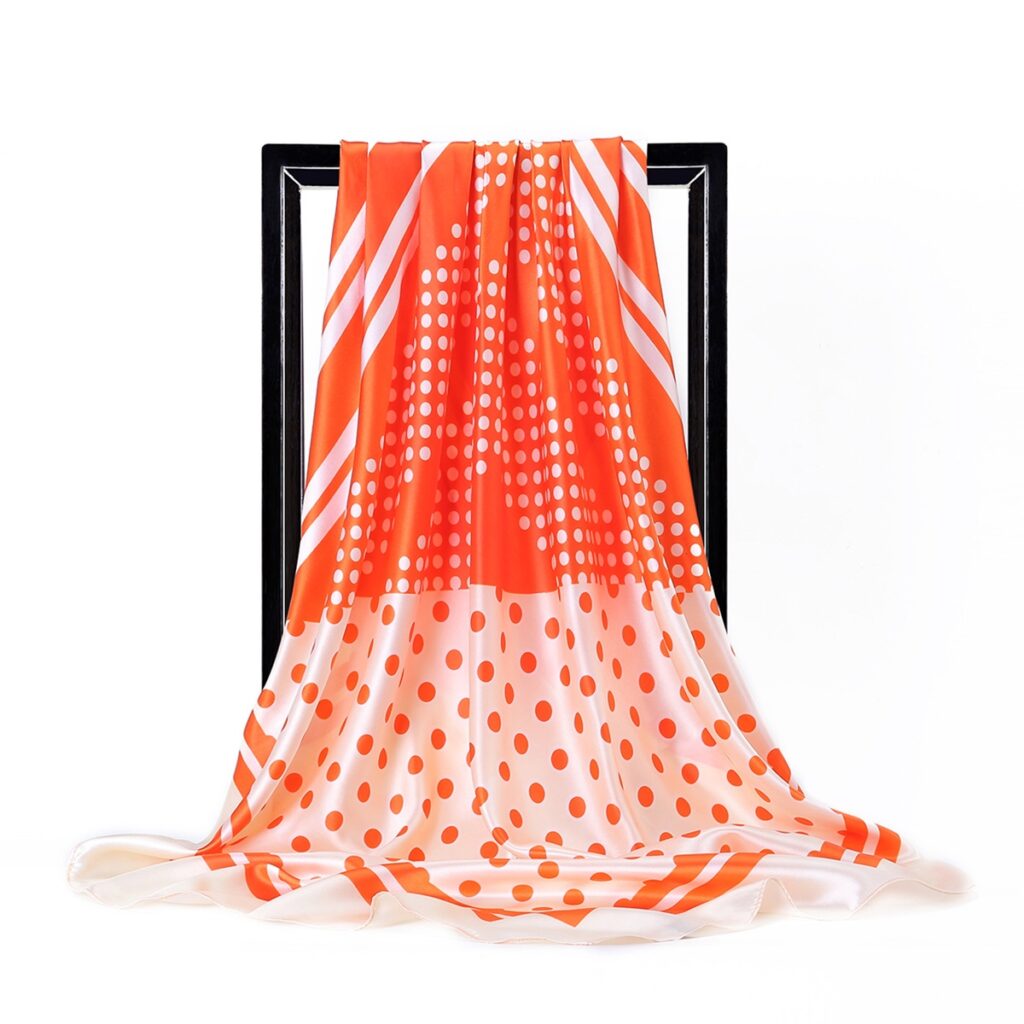
Defined patterns can also provide a useful focal point near the neckline. The Retro Polka Dot Satin Square Scarf works well as a neat neck wrap, bow or tucked collar accent.
Best Scarves for a Diamond Face
A diamond face is often widest at the cheekbones. Scarf styles that add gentle width lower down—at the collarbone or shoulders—can create balance. Try an open shoulder drape, a loose front knot or a triangle that sits below the neckline.
You can also wear a scarf on the handbag or in the hair when you want color without adding volume close to the cheekbones. This keeps the face open while still connecting the accessory to the outfit.
Best Scarves for an Oval Face
Oval faces generally work with a wide range of scarf shapes, so let the neckline and occasion guide you. A small side knot suits a shirt or blazer, a front triangle refreshes knitwear, and a shoulder drape adds color to a simple dress.
Use this flexibility to experiment with contrast. If your outfit is tailored, try a softly draped scarf. If your clothing is relaxed, a crisp folded square can add structure.
Face Shape Is Only One Part of the Decision
Consider your neckline
A high neckline usually needs a slimmer fold or longer drape. An open collar gives you room for a front triangle, bow or layered knot. With a blazer, place the scarf inside the lapels for a controlled frame.
Consider print scale
Small prints read as texture from a distance. Large motifs create a stronger focal point. If you want the scarf to brighten the face without dominating it, fold a large pattern so that only selected colors remain visible.
Consider color near your face
Hold the scarf below your chin in natural light. Notice whether the color makes your complexion look lively or muted. A scarf does not need to match everything; repeating one scarf color in your earrings, lipstick, handbag or jacket is often enough.
Consider where you want attention
A neck knot draws attention to the face. A shoulder drape connects the face to the whole outfit. A hair or handbag scarf moves the focal point away from the neckline. Choose placement according to the effect you want that day.
Compare the available shapes and textures in the Women’s Scarves collection, then visit the LadiesValue Style Guide for more ways to combine scarves with accessories and clothes you already own.
Scarf and Face Shape FAQ
Can a scarf actually change my face shape?
No accessory changes your physical face shape. A scarf changes the surrounding lines, color and visual balance, which can influence how the complete outfit frames your face.
What scarf style makes the face look longer?
Use an open neckline, a loose V shape or longer ends that create vertical lines. Avoid tight layers directly under the chin if length is your preferred effect.
What scarf style softens a strong jawline?
Try diagonal folds, loose curves and off-center knots. Fluid prints and gentle draping can make the frame around the jaw feel less rigid.
Should the scarf match my face shape or my outfit?
Start with the outfit and comfort, then use face-shape guidance to refine the fold. A beautiful scarf that works with your wardrobe will be more useful than one selected by a rule you do not enjoy wearing.
Your Best Scarf Is the One You Will Style More Than Once
Begin with a color already present in your wardrobe and test two placements: one near the face and one away from it. Take a quick photo of each. The comparison will show you more than a rigid list of rules.
Ready to find your shape and color? Explore Women’s Scarves, then use the styling tutorial to turn your choice into several different looks.